Lanyard Template for Sublimation
First Impressions: Clean, Versatile, and Quietly Professional
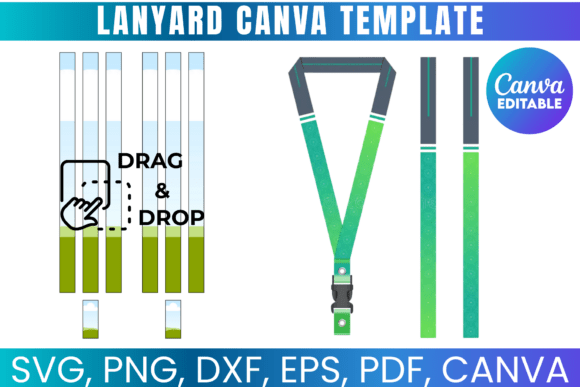
When I opened Lanyard Template for Sublimation, what struck me wasn’t flashiness—it was clarity. The shape is a classic breakaway lanyard profile: clean curves, balanced proportions, and subtle tapering at the ends. It’s not ornate, but that’s its strength. As an embroidery designer who’s stitched hundreds of custom lanyards for school events, boutique staff, and wedding parties, I immediately saw how this template could anchor a polished, cohesive look—especially when paired with a simple monogram, small logo, or minimalist icon.
Real-World Use Case: Stitching a Set for a Local Café’s Staff Launch
Last month, I used a similar (though less refined) lanyard layout to embroider 30 custom lanyards for “Hearth & Bean,” a neighborhood café launching their barista training program. They wanted something durable, branded, and easy to wear daily—not just a sublimated badge, but a handmade product that felt intentional. That’s where Lanyard Template for Sublimation shines: it’s built for real-world wear. Its open center space invites thoughtful placement—whether you’re adding a small embroidered logo near the clip, stitching a name in satin stitch along the strap, or framing the top loop with a delicate running stitch border.
Where It Works Best—And Where It Needs Thought
This isn’t a one-size-fits-all embroidery file. Its simplicity becomes an asset on stable, medium-weight fabrics like polyester webbing, cotton twill, or woven lanyard material—but it demands attention on trickier surfaces:
- Stretchy fabric? Skip direct hooping—use cutaway stabilizer underneath and consider a light tear-away top layer to prevent puckering around the edges.
- Thin or sheer fabric? Fill stitch density matters. If you’re adapting the template for a lightweight keychain wristlet, reduce fill density by 15–20% to avoid stiffness or shadowing.
- Curved surfaces (like caps)? Not ideal out of the box—the straight strap shape doesn’t conform naturally. Better suited for flat or gently contoured items: tote bag handles, apron straps, or pillow cover ties.
- Dark fabric? Test thread contrast early. A fine satin stitch detail may vanish on navy or charcoal without slightly heavier thread weight or a subtle outline stitch.
Design Personality Meets Practical Embroidery Needs
The mood is calm, confident, and quietly capable—no frills, no forced whimsy. That makes Lanyard Template for Sublimation unusually flexible across projects: a baby embroidery piece on a soft muslin bib strap, a holiday embroidery accent on a linen tea towel hanger, or even a subtle branding element on a boutique’s reusable shopping bag. It reads as professional without feeling corporate; handmade without looking amateurish.
I’ve seen too many lanyard designs overcomplicate the strap itself—adding excessive scrollwork or dense fill areas that don’t hold up after five washes. This one avoids that trap. Its clean lines translate well into both machine embroidery design and applique design, especially when layered with a contrasting fabric strip beneath the main strap area.
What It Adds to Your Finished Product—Beyond Just Shape
Using Lanyard Template for Sublimation does more than save time—it elevates perceived value. Customers notice when a lanyard feels *designed*, not just printed. That sense of intention builds trust: they believe your handmade product was considered from start to finish. For Etsy sellers and small shop owners, that translates directly to better reviews, repeat buyers, and stronger brand consistency across merch lines.
It also supports giftability. A lanyard with clean, balanced proportions feels special—even before personalization. Add a single embroidered initial or a tiny seasonal motif (a snowflake, a sprig of lavender), and it becomes a memorable personalized gift. No extra packaging needed. Just thoughtful execution.
Designer Notes You’ll Want Before Stitching
Before loading this into your embroidery software or uploading to Canva for mockups, here’s what I always do—and recommend you do too:
- Test the design on scrap fabric matching your final substrate—especially if using textured fabric or layered garments.
- Check thread color contrast in both black-and-white and full-color mockups. Does the detail read clearly on light and dark backgrounds?
- Review stitch density in tight corners—like where the breakaway clasp meets the strap. Overcrowded stitches there can cause skipped stitches or tension issues.
- Confirm hoop size compatibility. While the template is scalable, shrinking it below ~1.5" width risks losing definition in satin-stitched edges.
- Use proper stabilizer—especially for commercial embroidery runs. Medium-weight cutaway prevents stretching over repeated wear.
- Verify licensing terms. Since this is listed as a Graphics product intended for use in Canva, confirm whether the license permits resale of finished embroidered items—or if it’s limited to personal use or digital product previews.
A Template That Serves the Project—Not the Other Way Around
At its core, Lanyard Template for Sublimation succeeds because it stays out of the way. It doesn’t shout. It doesn’t distract. It gives structure so your creativity—your monogram, your brand mark, your seasonal flair—can land with clarity and confidence. Whether you’re prepping for a craft fair, building an Etsy listing, or fulfilling a boutique’s wholesale order, this is the kind of design asset that makes the difference between “good enough” and “I want ten more.”
Just remember: even the best template needs your eye, your hand, and your judgment. Stitch thoughtfully—and let the lanyard speak for itself.