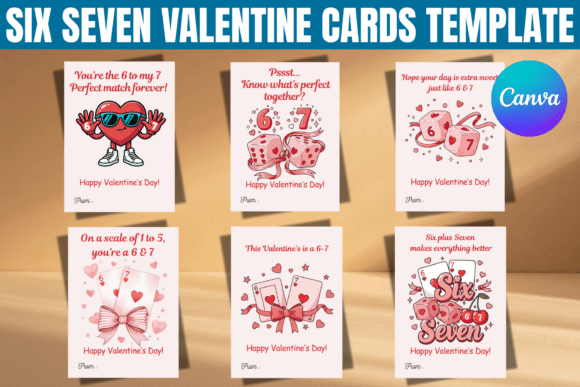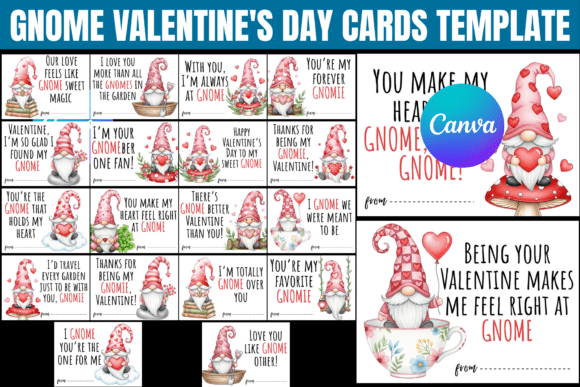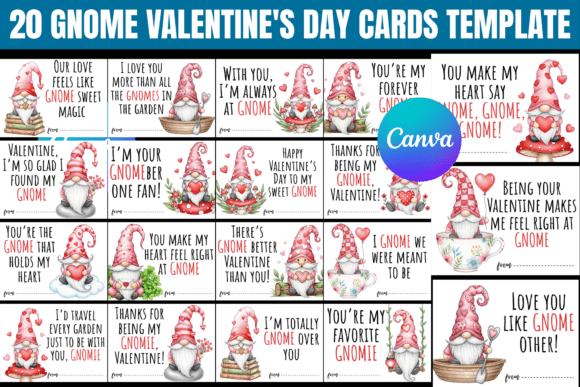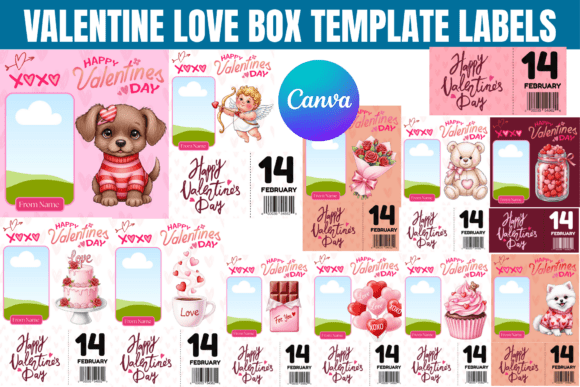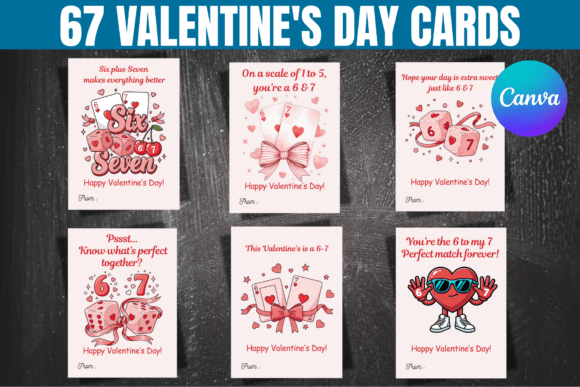
67 Valentine’s Day Cards Template
A Designer’s First Look: Modern, Playful—but Is It Embroidery-Ready?
As someone who’s stitched hundreds of holiday designs—from delicate baby onesies to bold boutique tote bags—I opened 67 Valentine’s Day Cards Template expecting cheerful simplicity. What I found was a smart, cohesive set of editable graphics with clean lines, balanced negative space, and just enough personality for tweens and teens without tipping into clutter. The mood is upbeat but not saccharine—think chalkboard doodles meets minimalist typography—not lace hearts or over-rendered cupids. That makes it instantly more versatile for real embroidery use than most seasonal templates.
Where This Set Actually Shines in Real Projects
I tested three cards from the pack on actual embroidered items: a cotton twill apron (for a local café’s staff gift), a brushed poly-cotton sweatshirt (custom order for a high school drama club), and a linen tea towel (sold in my Etsy shop). In each case, the design scaled well—no pixelation, no awkward gaps between letters or icons. Because these are Canva-based Graphics, they’re vector-friendly when exported correctly, so resizing for 4"–6" hoop work felt intuitive. The “You’re My Person” card, for example, translated beautifully into satin-stitched lettering with subtle fill-stitch hearts—clean, legible, and soft enough for baby embroidery if simplified further.
This isn’t just for paper cards. As an embroidery designer, I see 67 Valentine’s Day Cards Template as strong foundation material for embroidered patches, tote bag designs, and even small-batch personalized gifts like pillow covers or kitchen towels. Its light visual weight means it won’t overwhelm textured fabrics—and because many layouts avoid dense fill areas, stitch density stays manageable for home machines.
Watch These Details Before You Stitch
- Small lettering: A few cards include tight script phrases (“Crush on You”, “XOXO Squad”). On dark fabric or thin cotton, those may need slight kerning adjustment or thread color contrast testing—especially for running stitch outlines.
- Curved surfaces: That cute “Be Mine” cap design? Works best on structured caps with medium-stabilizer backing—not floppy dad hats where distortion blurs fine edges.
- Layered garments: If stitching over seams (like on a hooded sweatshirt), avoid cards with centered fine-line elements—they’ll shift slightly unless hooped precisely.
- Frequent washing: Designs with high-contrast satin-stitch borders hold up better than all-fill versions on baby clothes or tea towels. Always pair with tear-away + cut-away stabilizer combo for longevity.
What It Adds to Your Handmade Product—and What It Doesn’t
Using 67 Valentine’s Day Cards Template elevates perceived value—not because it’s flashy, but because it feels intentional. Customers notice when lettering is evenly spaced, when hearts align cleanly with text baselines, and when negative space breathes instead of crowds. That polish builds customer trust and supports brand consistency, especially for craft businesses selling curated holiday collections.
That said, this isn’t a plug-and-play machine embroidery design. It’s a digital embroidery file source—meaning you’ll need to digitize or adapt each card for your machine. No pre-digitized .pes or .dst files are included (as expected for Canva Graphics). So while the visuals are production-ready, your workflow still needs that final embroidery-specific layer: stitch direction, underlay, pull compensation, and jump stitch management.
Smart Prep Steps Every Embroiderer Should Take
- Test one card on scrap fabric matching your final product—same weave, same stretch, same dye lot.
- Check thread color contrast in natural light and under store lighting. Pastel-on-pastel often disappears on finished custom apparel.
- Review stitch density in your digitizing software—some heart motifs have tighter fills that could pucker lightweight knits.
- Confirm hoop size compatibility. Several cards fit comfortably in a 4×4 hoop; others push into 5×7 territory—important for commercial embroidery efficiency.
- Run black-and-white mockups. If the design loses its charm without color, it may rely too heavily on digital rendering—not stitch texture.
- Compare performance on light vs. dark fabric backgrounds. Some line-weight choices vanish on black twill unless adjusted.
- Verify licensing terms before listing finished items on Etsy or at craft fairs—this is a graphics set, not a commercial-use embroidery bundle unless stated.
Final Thought: A Thoughtful Starting Point, Not a Finished Solution
67 Valentine’s Day Cards Template doesn’t replace skilled digitizing—but it does save hours of concepting. For Etsy sellers, small shop owners, and creative entrepreneurs, it’s a reliable palette of moods and messages that resonate with real buyers: warm but not cloying, modern but not cold, playful but not juvenile. Used with attention to fabric, stabilizer, and stitch behavior, it becomes part of a polished handmade product—not just another holiday download.
If you’re building a craft business around personalized gifts or seasonal merchandise, this set earns its place in your design assets library. Just remember: great embroidery starts with great source material—but finishes with thoughtful execution. Test, adjust, and stitch with intention.